

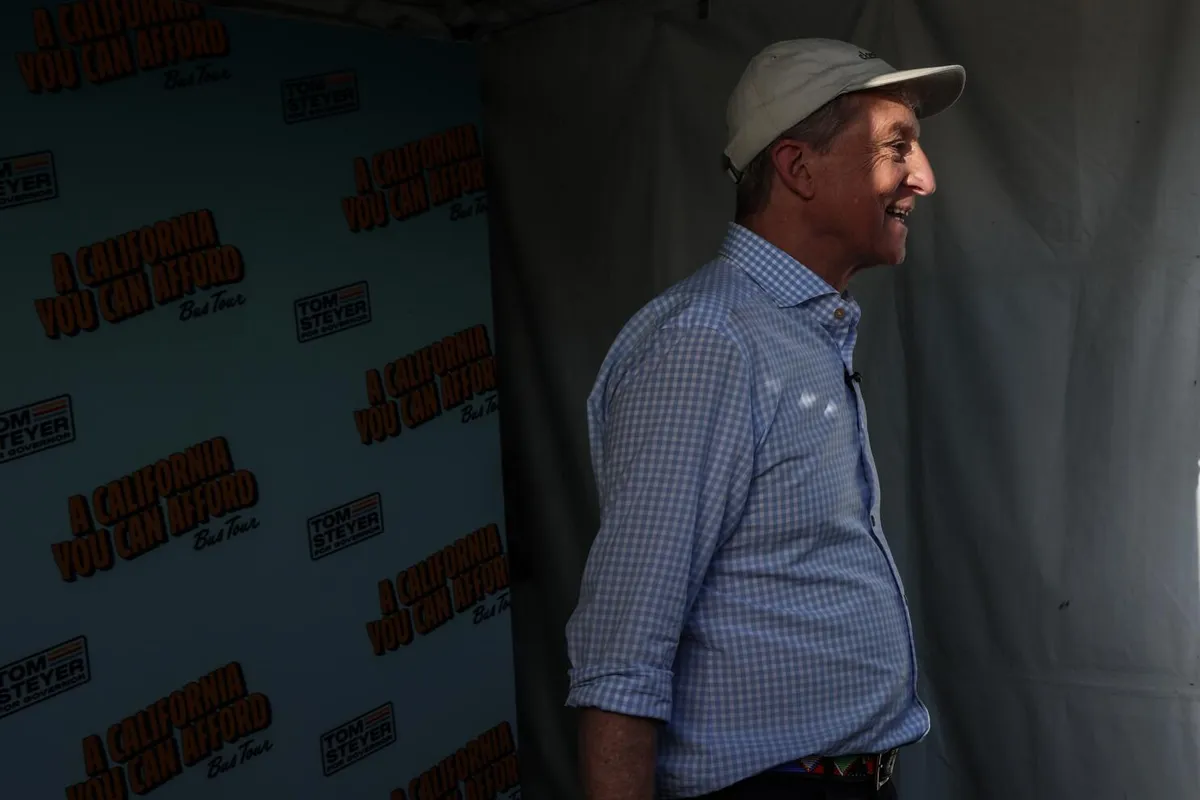
Social media influencers recently promote billionaire Democrat Tom Steyer’s bid for California governor across platforms like TikTok. They highlight rising gasoline costs, environmental issues, and personal transformations mirroring Steyer’s shift from hedge fund manager to corporate critic.
One TikTok creator, Jaz R., states, “I did not expect the most progressive governor candidate to be a billionaire, but look at the policies you guys.” Another adds, “Hear me out. I know Tom Steyer is a billionaire, but he also is for the people.” These videos feature direct appeals blending personal stories with policy endorsements, such as walks showcasing Steyer’s platform via onscreen text. Some aim for authenticity, even with minor errors like mispronouncing Steyer’s name.
Complaint Alleges Disclosure Failures
A complaint filed this week with California’s Fair Political Practices Commission (FPPC) claims the Steyer campaign did not inform hired influencers of their duty to disclose paid sponsorships. Examination of the posts confirms no such disclosures appear.
Political influencers Beatrice Gomberg and Kaitlyn Hennessy filed the complaint after spotting new accounts posting similar pro-Steyer content earlier this month. “They had the exact same language, they had the same talking points,” Gomberg notes.
Steyer’s campaign relies heavily on paid influencers, per recent finance filings, though this spending is minor compared to the nearly $180 million Steyer has personally contributed.
California’s 2023 Influencer Disclosure Law
California’s 2023 law mandates influencers disclose payments for political content promoting or opposing candidates or measures—one of few such rules nationwide. State Sen. Tom Umberg (D-Orange), the bill’s sponsor, explains, “Every time there’s a new technology, you have to create legislation that requires them to disclose.”
Violations prompt no direct penalties, but the FPPC can seek court orders for compliance. Influencers must add disclosures in audio or text; campaigns must notify them of this obligation.
Campaign Denies Wrongdoing
Steyer spokesperson Kevin Liao asserts the campaign followed all rules. “Creators make their living generating content. The campaign believes in compensating people for their time and work product and has paid creators to generate content,” Liao states. “Payments for creator content are disclosed in campaign finance reports, and we notify creators we directly work with of their disclosure requirements.”
Finance reports show payments to high-follower influencers, whose videos also lack disclosures. Even low-follower accounts amplify reach by flooding algorithms, says veteran strategist Mike Madrid. “What they’re trying to do is trip the algorithm,” he explains. “It looks like it has a bigger audience than it really does. It’s taking the concept of astroturfing into the digital age.”
Investigation Reveals Broader Patterns
Gomberg and Hennessy, supporters of rival Xavier Becerra, uncovered a campaign vendor ad offering $10 per post plus view bonuses. The ad now lists $1,000 monthly with disclosure mandates. Some influencers hail from outside California, including Florida, Pennsylvania, Missouri, and Michigan. Many previously promoted unrelated products like arousal gummies.
A campaign finance lawyer, speaking anonymously, notes, “I have dozens of candidates and campaigns and I have not heard this issue come up one time.” Hennessy emphasizes accountability: “You have people who have trust in these creators. You have a responsibility to your audience.”
This controversy underscores influencers’ rising role in politics, following cases like those impacting Eric Swalwell’s campaign.
