

Major Discovery by NASA’s Curiosity Rover
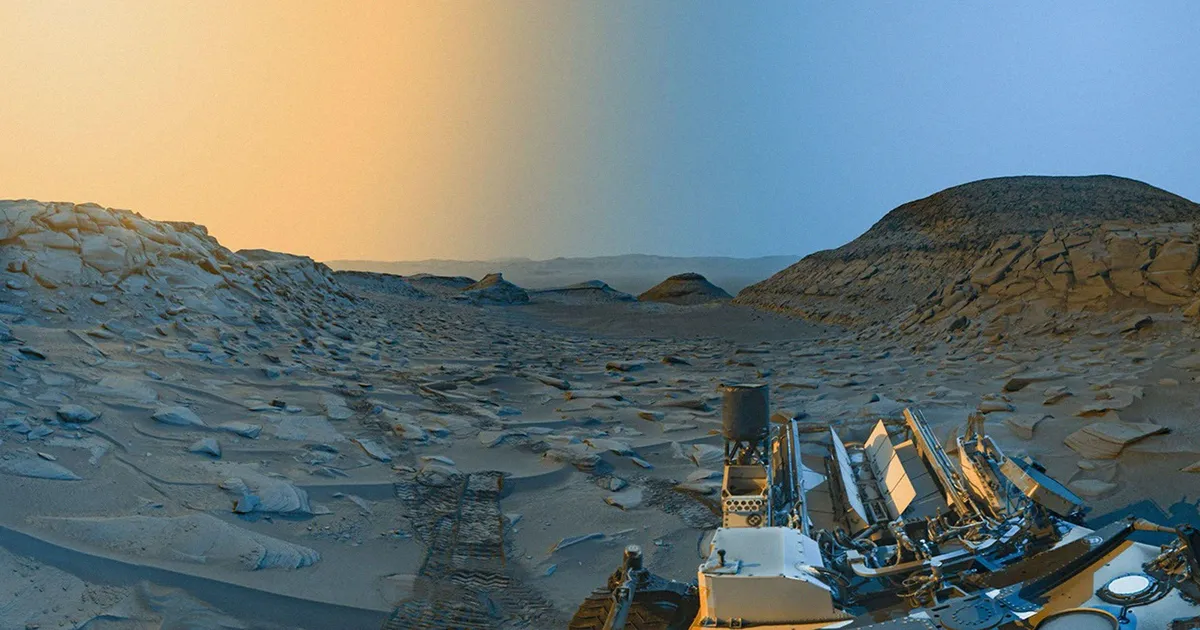
Last year, NASA’s Curiosity rover drilled into an ancient lake bed on Mars and uncovered long-chain organic molecules known as alkanes. These compounds resemble fatty acids, which form cell membranes on Earth, bolstering evidence that the Red Planet may have hosted life billions of years ago.
While not conclusive proof, the find adds to the growing body of clues suggesting Mars once supported microbial life.
Radiation-Resistant Organics Puzzle Scientists
A recent study in the journal Astrobiology, led by Alexander Pavlov at NASA’s Goddard Space Flight Center, examines these molecules’ survival despite millions of years of intense surface radiation following Mars’ atmospheric loss.
Researchers modeled 80 million years of radiation exposure and determined that pre-atmospheric concentrations of these alkanes must have been far higher than expected. Common non-biological sources, such as carbon-rich dust and meteorites, fail to account for the observed levels, even when combined with other abiotic processes.
“We argue that such high concentrations of long-chain alkanes are inconsistent with a few known abiotic sources of organic molecules on ancient Mars,” the team states.
Biological Origins Remain Viable Hypothesis
Biological processes, similar to those on Earth, emerge as a primary explanation despite exhaustive efforts to identify non-life alternatives. The researchers caution against firm conclusions, noting unknown abiotic mechanisms could still exist.
“We agree with Carl Sagan’s claim that extraordinary claims require extraordinary evidence,” they write. “Any purported detection of life on Mars will necessarily be met with intense scrutiny. In addition, established norms in astrobiology require multiple lines of evidence for certainty.”
Path Forward for Mars Exploration
Mars, with its ancient oceans, rivers, and lakes, continues to intrigue scientists. Pavlov’s team urges additional experiments simulating radiation effects under Mars-like conditions to clarify the molecules’ origins and advance the quest for extraterrestrial life.
