

Groundbreaking Fossil Find Challenges Dinosaur Theories
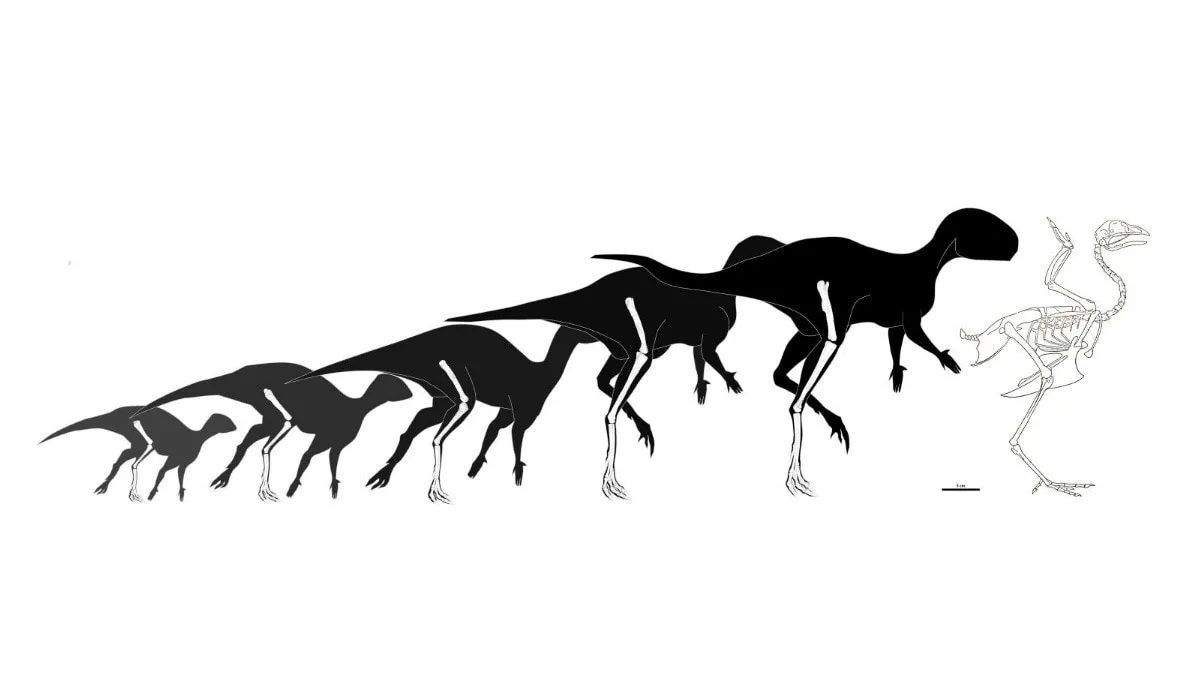
Paleontologists have announced the discovery of a remarkably small dinosaur species that fundamentally alters understanding of prehistoric evolution. Named Foskeia pelendonum, this forest-dwelling ornithopod measured smaller than most humans and inhabited Spain’s dense woodlands approximately 70 million years ago.
Exceptional Fossil Specimens
Excavation teams recovered fossils from five individuals at a dig site near Fuentes del Duero, Spain. Lead researcher Fidel Torcida Fernández-Baldor from the Dinosaur Museum noted: “The exceptional preservation and minute size immediately signaled we’d found something revolutionary. This discovery overturns global assumptions about ornithopod development.”
Anatomical Marvels Revealed
The species exhibits several extraordinary features that distinguish it from known dinosaurs:
Specialized Physical Adaptations
“Miniaturization didn’t equate to simplicity,” explained paleontologist Marcos Becerra. “This creature possessed a hyper-derived skull structure and specialized dentition unlike anything in the fossil record.” Analysis indicates posture shifts during growth phases enabled rapid movement through dense Cretaceous forests.
Metabolic Insights
Histological studies of bone microstructure revealed unexpectedly high metabolic rates comparable to modern small mammals. Dr. Koen Stein, who conducted the analysis, stated: “Growth pattern examination proves these were sexually mature adults, fundamentally changing how we compare anatomical development across species.”
Evolutionary Implications
Bridging the Fossil Gap
The discovery fills a critical 70-million-year void in the dinosaur fossil record. “Foskeia serves as a pivotal key unlocking vast missing chapters of evolutionary history,” noted Thierry Tortosa of Sainte Victoire Natural Reserve.
Phylogenetic Breakthrough
New research positions Foskeia as evolutionary sister to Australia’s Muttaburrasaurus within the Rhabdodontomorpha group. This finding both expands Europe’s Rhabdodontia clade and revitalizes debate about Phytodinosauria classification of plant-eating dinosaurs.
Research Significance
Penélope Cruzado-Caballero from Universidad de La Laguna emphasized: “The anatomical peculiarities precisely rewrite established evolutionary trees.” The study demonstrates that evolutionary experimentation occurred as radically in small-bodied dinosaurs as their colossal counterparts.
Lead researcher Dieudonné concluded: “This discovery underscores that future paleontological breakthroughs may emerge from studying humble, fragmentary, and small-scale specimens that previous research overlooked.”
