

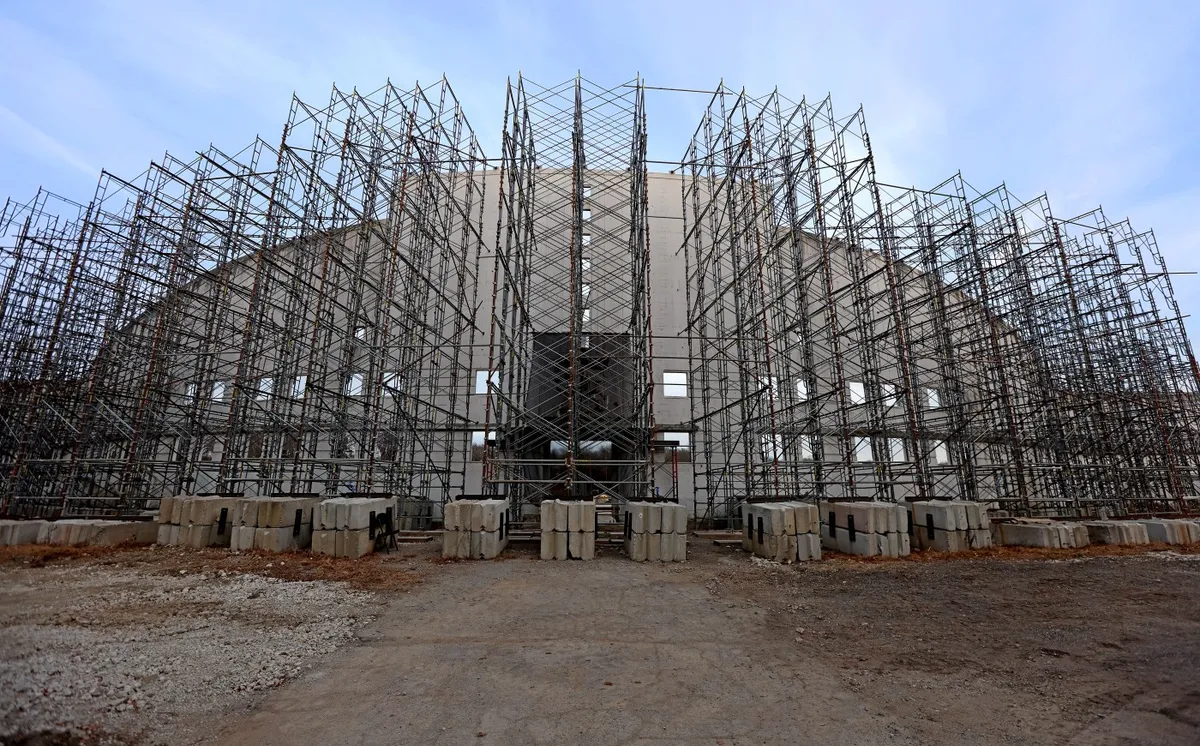
Opposition intensifies against Boston’s $325 million public-private plan to rebuild White Stadium for a professional soccer team, as the city’s taxpayer contribution climbs to $135 million. Residents and city councilors challenge administration officials’ claims that recent cost updates are final and that no alternatives exist. Construction starts this month on the project, first unveiled two years ago with an initial city share of $50 million.
Community Frustration Mounts
City Councilor Brian Worrell highlights community frustration during a recent council hearing, noting the process excluded local input from the start. “It wasn’t a private stadium versus a public option. I think that’s an ultimatum our community hears too often,” Worrell states. “It’s like, you’re either going to go with this option or you’re not going to get the investment inside of your neighborhood.”
Worrell draws parallels to past discussions on a soccer stadium at the Bayside Expo Center, which halted due to community and elected officials’ concerns. “Past conversations stopped short… because of community voice and elected officials pulling back, so it just kind of unfortunately reaffirms to certain communities that government is not working for them,” he adds.
Residents from majority-Black neighborhoods in Dorchester, Mattapan, and Roxbury, surrounding Franklin Park’s White Stadium, express feeling sidelined. Reggie Stewart, a District 7 advisory council member, warns that future votes will hinge on stances regarding perceived broken promises, including shifts on Roxbury’s Parcel P3 for a new Madison Park Technical Vocational High School.
“For many residents, the decision-making processes around issues such as Parcel P3, White Stadium, Blue Hill Avenue, and other development choices are not being treated as routine planning matters,” Stewart says. “They’re being viewed through the lens of Boston’s racist history of urban renewal… The mayor is unilaterally making decisions… fracturing an already fragile trust with the Black community.” Stewart cautions that city leadership skates “on the thinnest of ice” with Black Boston.
Tensions at Council Hearing
Councilor Sharon Durkan chairs the hearing, limiting a community panel invited by Councilor Julia Mejia to brief public testimony, escalating tensions. Panelists from the Franklin Park Defenders group, alongside the Emerald Necklace Conservancy, pursue a lawsuit alleging unconstitutional privatization of public parkland. They advocate a high-school-only renovation estimated at $64.6 million.
A Suffolk Superior Court judge ruled for the city last spring, but the appeal heads to the state’s highest court later this year. Mejia voices concerns: “For me, I’m not about supporting billionaires, so I’m really concerned about who’s going to be benefiting here.” The stadium will host National Women’s Soccer League team Boston Legacy FC, sharing with Boston Public Schools athletes.
Officials Defend Partnership
Administration officials argue a private partner is essential, as a public-only rebuild exceeds $135 million. Diana Fernandez Bibeau, deputy chief of urban design, cites a $150 million high-school soccer stadium in Seattle. “A public-only stadium would cost taxpayers ‘well over’ $135 million,” she states.
Officials confirm the $135 million city share is capped under a guaranteed maximum price contract with contingencies, though unforeseen issues could raise costs. “We’ve committed to do a project that has been decades in the making… We are finally delivering on decades of students that have wanted this work done,” Fernandez Bibeau emphasizes, framing it as investment in Black and brown communities.
