

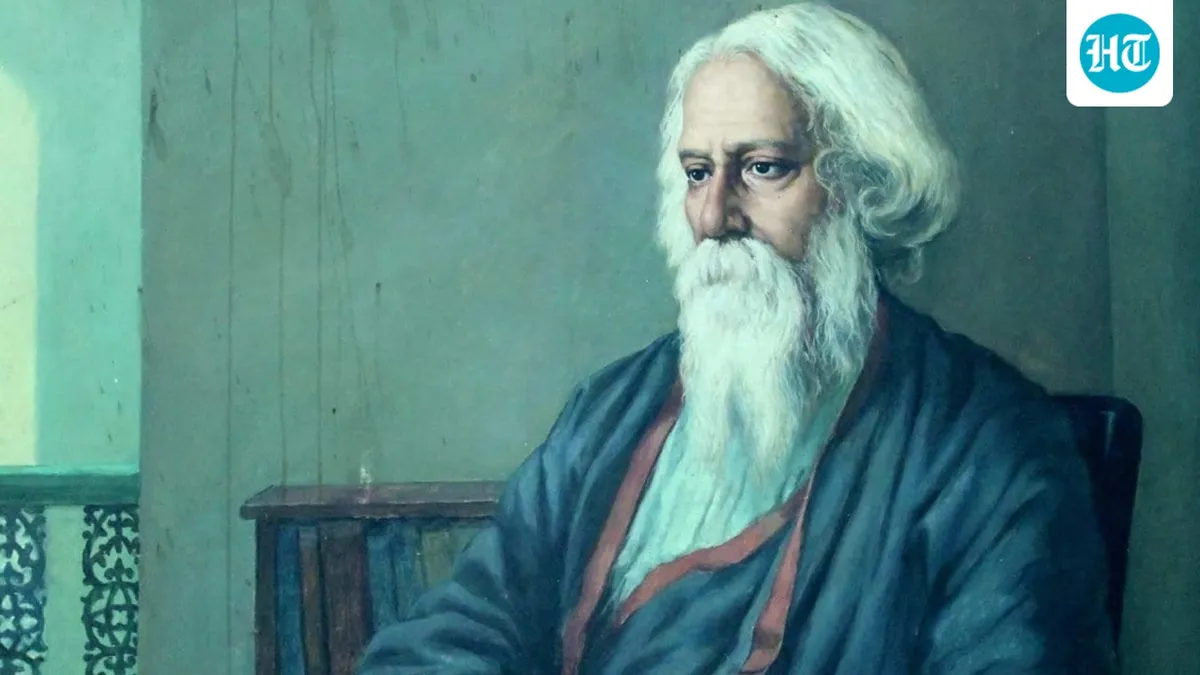
Rabindra Jayanti, celebrated on May 7, honors the birth anniversary of Rabindranath Tagore, one of India’s most influential literary icons. Known as the Bard of Bengal and revered as Kabiguru, Tagore excelled as a poet, musician, philosopher, and artist, shaping Indian literature and music profoundly.
Tagore’s Enduring Legacy
Tagore earned the Nobel Prize in Literature in 1913 for his collection Gitanjali, marking him as the first Asian recipient. His vast contributions include thousands of songs and novels, as well as composing the national anthems of India and Bangladesh. During British colonial rule, he exemplified resilience by renouncing his knighthood in 1919 to protest the Jallianwala Bagh Massacre.
A Timeless Poem from Gitanjali
On this occasion, Tagore’s profound words from Gitanjali, specifically Chapter 35, inspire reflection. The collection features 103 poems blending art, politics, music, and spirituality. Here is the evocative piece:
Where the mind is without fear, and the head is held high;
Where knowledge is free;
Where the world has not been broken up into fragments by narrow domestic walls.Where words come out from the depth of truth;
Where tireless striving stretches its arms towards perfection;
Where the clear stream of reason has not lost its way into the dreary desert sand of dead habit;
Where the mind is led forward by thee into ever-widening thought and action
Into that heaven of freedom, my Father, let my country awake.
The Deeper Significance
Composed amid British rule, this poem envisions a nation free from fear, where individuals think and speak openly. Its message extends to personal liberation, urging inner strength to overcome fears, doubts, and societal prejudices. A fearless mind fosters clarity and confidence, while truthful thoughts demand personal integrity. Tagore’s prayer for awakening underscores freedom’s dual nature—starting within the individual and expanding to the collective.
